The Diploma in Electrical and Electronics Engineering (DEEE) is a three-year technical program designed to develop skilled professionals in the field of electrical systems, electronic devices, and automation technologies. The course provides a comprehensive foundation in electrical principles, control systems, circuit analysis, and emerging technologies like embedded systems and renewable energy.
To provide quality technical education in electrical and electronics engineering that supports innovation, sustainability, and excellence.
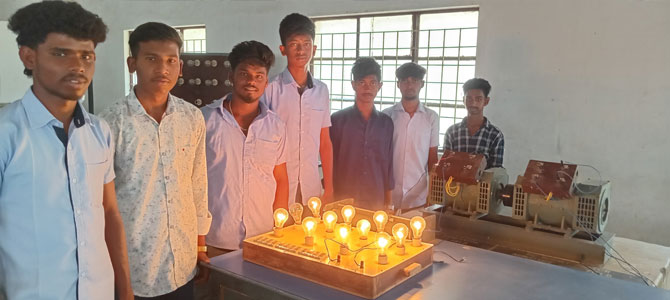
To create a practice-oriented learning environment through modern labs, industry tie-ups, and workshops.
To produce graduates who are capable of solving real-world engineering challenges with integrity and skill.
To become a recognized leader in electrical and electronics engineering education, fostering technological innovation, ethical practice, and global employability.
The Department of Electrical and Electronics Engineering at Karur Polytechnic College is known for its strong academic culture, modern infrastructure, and experienced faculty team. The department focuses on nurturing students through theoretical instruction, practical training, and real-world project work, preparing them for dynamic roles in electrical and electronics industries.
 Basic Electrical & Electronics Engineering
Electric Circuits & Machines
Power Systems and Distribution
Control Systems and Instrumentation
Electrical Estimation and Energy Auditing
Digital Electronics and Microcontrollers
PLC & SCADA Systems (Add-on)
Industrial Project and In-plant Training
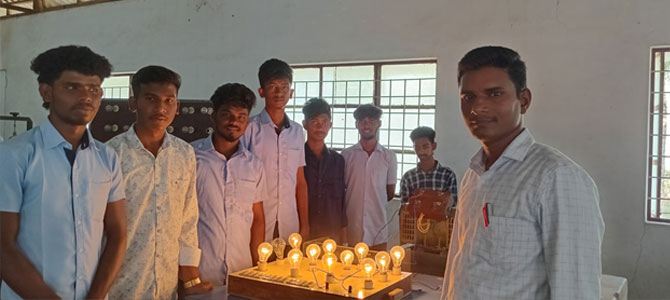
Electrical Machines Lab – Hands-on experience with AC/DC
motors, transformers, and generators.
Power Electronics Lab – Practical experiments on
converters, inverters, and drives.
Electrical Wiring and Winding Lab – Real-time installation
and motor winding practice.
Basic Electronics Lab – Study of diodes, transistors,
oscillators, and amplifiers.
Control Systems & PLC Lab – Programming and simulation of
industrial automation systems.
CNC
Project Lab – Dedicated space for innovative student
projects and mini models.
Basic Electrical & Electronics Engineering
Electric Circuits & Machines
Power Systems and Distribution
Control Systems and Instrumentation
Electrical Estimation and Energy Auditing
Digital Electronics and Microcontrollers
PLC & SCADA Systems (Add-on)
Industrial Project and In-plant Training
Electrical Machines Lab – Hands-on experience with AC/DC
motors, transformers, and generators.
Power Electronics Lab – Practical experiments on
converters, inverters, and drives.
Electrical Wiring and Winding Lab – Real-time installation
and motor winding practice.
Basic Electronics Lab – Study of diodes, transistors,
oscillators, and amplifiers.
Control Systems & PLC Lab – Programming and simulation of
industrial automation systems.
CNC
Project Lab – Dedicated space for innovative student
projects and mini models.
 Electric Utilities and Power Plants
Automation and Control Industries
CNC
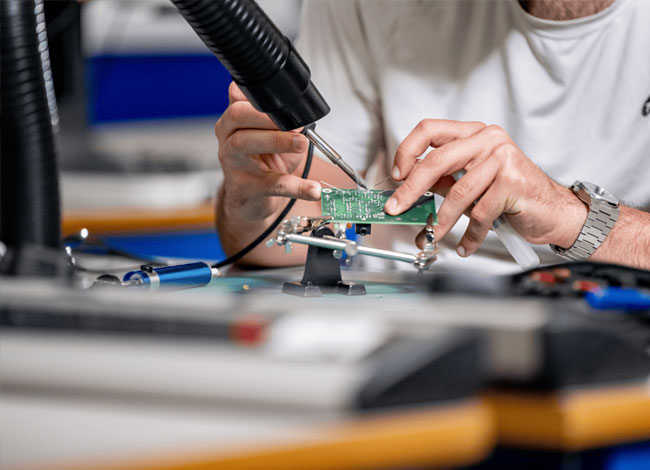
Electronics Manufacturing and PCB Design
Maintenance, Installation, and Service Sectors
Government and Public Sector Units (TNEB, BHEL, Railways,
PWD)
Private companies involved in renewable energy, home
automation, and embedded systems
Higher education pathways like B.E./B.Tech in EEE or ECE
Electric Utilities and Power Plants
Automation and Control Industries
CNC
Electronics Manufacturing and PCB Design
Maintenance, Installation, and Service Sectors
Government and Public Sector Units (TNEB, BHEL, Railways,
PWD)
Private companies involved in renewable energy, home
automation, and embedded systems
Higher education pathways like B.E./B.Tech in EEE or ECE