The Diploma in Electronics and Communication Engineering (DECE) is a three-year diploma program designed to offer students a solid foundation in electronic systems, digital communication, embedded systems, and signal processing. This program prepares students for the modern tech-driven world, focusing on both hardware and software integration.
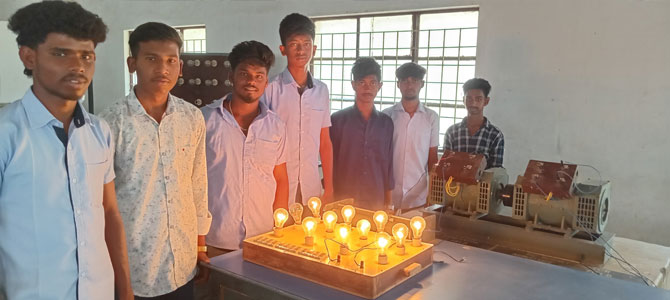
To deliver quality technical education in ECE with a blend of academic rigor and practical exposure.
To provide hands-on training in emerging technologies such as IoT, Embedded Systems, and VLSI.
To equip students with the problem-solving and analytical skills necessary to thrive in global electronics and communication sectors.
To emerge as a center of excellence in electronics and communication education, nurturing engineers who are innovative, employable, and socially responsible.
The Department of Electronics and Communication Engineering at Karur Polytechnic College is committed to producing technically competent, creative, and industry-ready engineers. The department has a legacy of excellence with experienced faculty, industry interaction, and consistent placement records. It provides a vibrant learning atmosphere emphasizing innovation, hands-on projects, and teamwork.
 Fundamentals of Electronics
Analog and Digital Circuits
Communication Systems
Microprocessors and Microcontrollers
Embedded Systems & IoT
Signal Processing & Antenna Design
Consumer Electronics
PCB
Design & Fabrication
Wireless and Optical Communication
Industrial Project & Internship
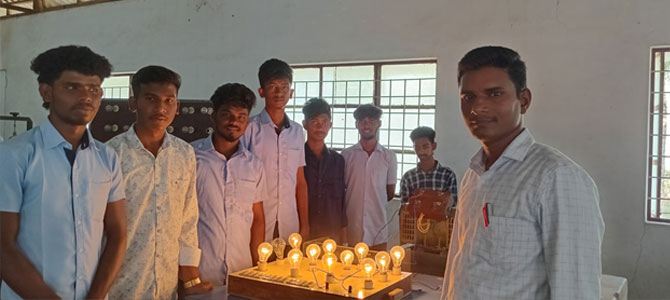
Basic Electronics Lab – For circuit design, diodes,
transistors, amplifiers.
Digital and Microcontroller Lab – Hands-on training with
microprocessors, microcontrollers, and Arduino systems.
Communication Systems Lab – Study of analog, digital, and
optical communication systems.
Embedded Systems Lab – Featuring kits for real-time
project development and programming.
PCB
Design & Fabrication Lab – Tools for layout design, etching,
and testing.
CNC
Simulation Lab – Software tools for circuit simulation and
testing (MATLAB, Proteus, etc.)
Fundamentals of Electronics
Analog and Digital Circuits
Communication Systems
Microprocessors and Microcontrollers
Embedded Systems & IoT
Signal Processing & Antenna Design
Consumer Electronics
PCB
Design & Fabrication
Wireless and Optical Communication
Industrial Project & Internship
Basic Electronics Lab – For circuit design, diodes,
transistors, amplifiers.
Digital and Microcontroller Lab – Hands-on training with
microprocessors, microcontrollers, and Arduino systems.
Communication Systems Lab – Study of analog, digital, and
optical communication systems.
Embedded Systems Lab – Featuring kits for real-time
project development and programming.
PCB
Design & Fabrication Lab – Tools for layout design, etching,
and testing.
CNC
Simulation Lab – Software tools for circuit simulation and
testing (MATLAB, Proteus, etc.)
 Telecommunication & Networking Companies
Consumer Electronics & Semiconductor Industries
Embedded System Design Firms
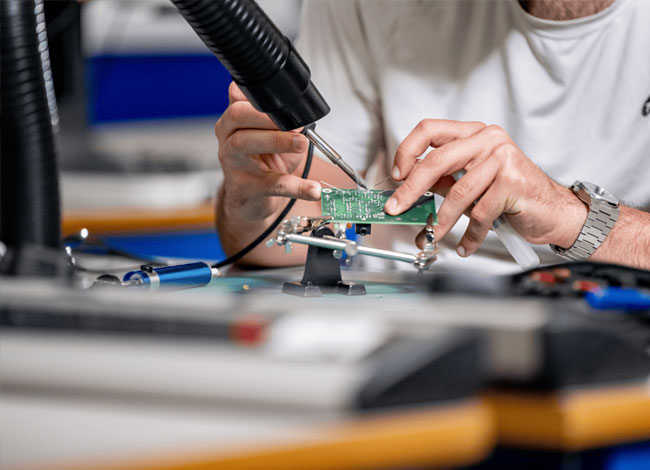
PCB
Manufacturing and Service Centers
Research Labs and Automation Sectors
Government Jobs in Railways, BSNL, ISRO, DRDO, and PWD
Further Studies in B.E. / B.Tech (ECE, EEE, E\&I)
Telecommunication & Networking Companies
Consumer Electronics & Semiconductor Industries
Embedded System Design Firms
PCB
Manufacturing and Service Centers
Research Labs and Automation Sectors
Government Jobs in Railways, BSNL, ISRO, DRDO, and PWD
Further Studies in B.E. / B.Tech (ECE, EEE, E\&I)